
Why Petrol Pumps Are Switching to Solar Energy in 2026
The Indian fuel retail sector is changing fast. With unprecedented volatility in global energy markets, business owners are looking for stable power sources. The Middle East conflicts have made electricity costs unpredictable.
Many owners are turning to solar for petrol pump systems. This move helps them become energy-independent and cut down on monthly costs. By using renewable tech, they prepare for future market changes.
2026 is a key year for the industry. With technology getting cheaper, solar for petrol pump systems are now a smart financial move. This change helps fuel retailers stay profitable in a shaky global energy market.
Key Takeaways
- Global market instability is driving Indian fuel retailers toward renewable energy solutions.
- Adopting clean energy helps mitigate the financial impact of fluctuating electricity prices.
- Energy independence is becoming a critical competitive advantage for modern fuel stations.
- The year 2026 marks a significant acceleration in the adoption of sustainable power technologies.
- Renewable investments provide long-term cost stability in a volatile economic climate.
The Economic Drivers Behind Solar for Petrol Pump Adoption
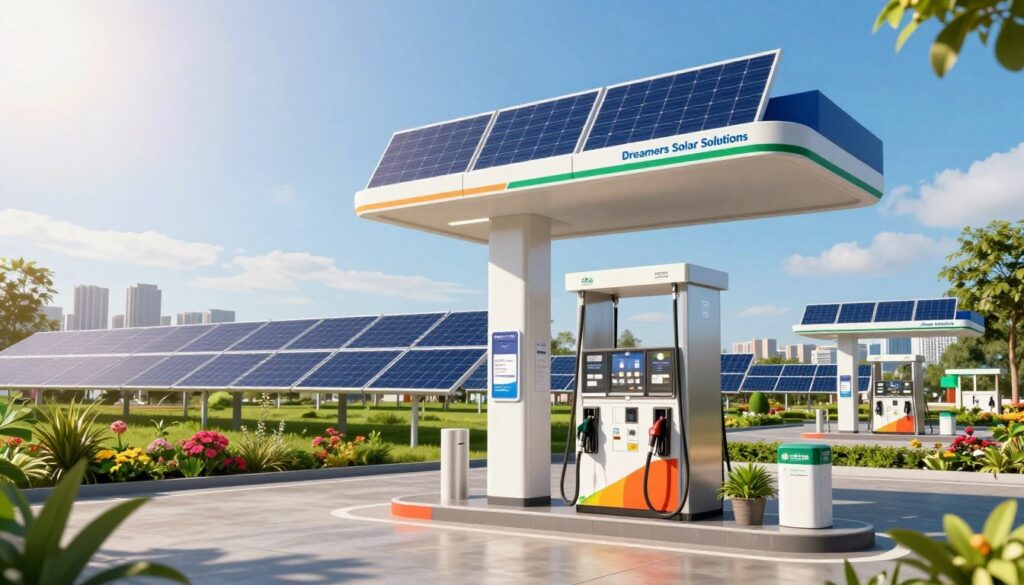
Using solar for petrol pump operations is now a smart financial choice for business owners in India. As the fuel retail industry faces tighter margins, station owners look for ways to cut costs. Switching to renewable energy helps them stay stable against the ups and downs of traditional power markets.
Rising Grid Electricity Costs and Operational Expenses
Fuel retailers face high monthly electricity bills for dispensing units, lighting, and offices. These costs eat into their profits, making solar for petrol pump systems a good option. By making their own power, owners can cut down on expensive grid electricity.
Many businesses are choosing energy independence to shield their profits from tariff hikes. This move is key to keeping prices competitive in a busy retail setting. With solar energy solutions, station managers can keep their monthly costs steady.
Long-term Return on Investment for Fuel Retailers
Investing in a solar for petrol pump setup is a smart move for long-term financial health. The upfront cost is big, but the savings on utility bills make it worth it. Over ten years, the savings will more than cover the initial investment.
The table below shows how solar can change a typical Indian petrol station’s finances.
| Cost Metric | Grid-Only System | Solar-Integrated System |
|---|---|---|
| Monthly Energy Cost | High & Variable | Low & Predictable |
| Maintenance Needs | Minimal | Regular Cleaning |
| ROI Timeline | N/A | 4 to 6 Years |
| Asset Longevity | Standard | 25+ Years |
By going for a solar for petrol pump system, owners secure their energy future and boost their property’s value. This forward-thinking move helps fuel retailers stay profitable, even as the global energy scene changes.
Regulatory Mandates and Government Incentives in India
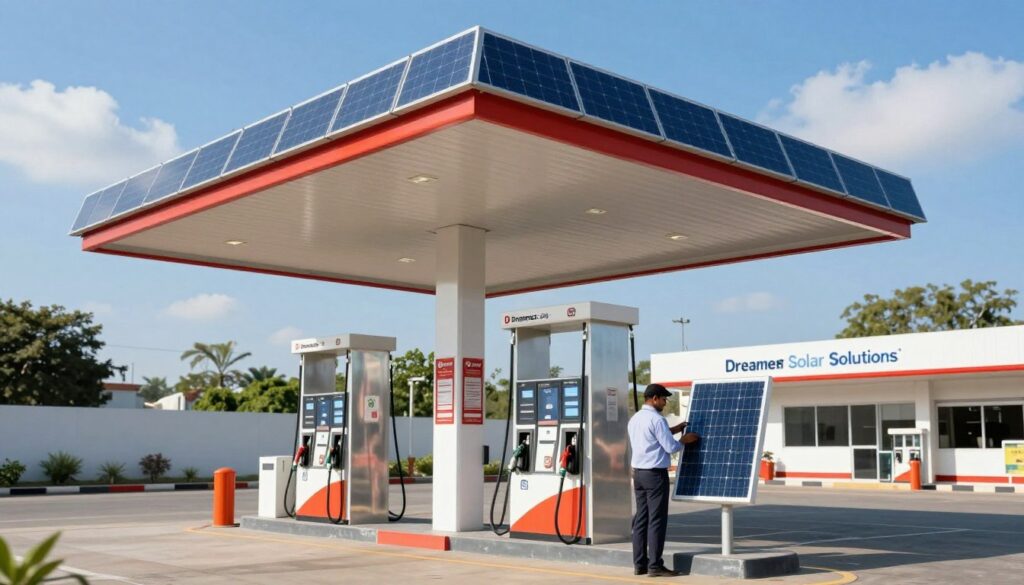
India is moving towards sustainable energy at petrol pumps with strong government support. The Ministry of Petroleum and Natural Gas has set clear goals to encourage renewable energy use. A key method for retailers to meet these goals is through petrol pump solar installation.
Compliance with Ministry of Petroleum and Natural Gas Guidelines
The Ministry of Petroleum and Natural Gas (MoPNG) has set rules for fuel stations to use energy more efficiently. Station owners must check their energy use and add renewable sources when possible. Following these rules is crucial to keep licenses and avoid fines.
By choosing petrol pump solar installation, owners show they care about the country’s energy security. These rules often state the minimum solar capacity needed based on the station’s daily use. This ensures the station is safe, reliable, and ready for future energy rules.
Subsidies and Financial Support for Renewable Energy Integration
The Indian government helps with financial support through the Ministry of New and Renewable Energy (MNRE). These programs help small and medium-sized fuel stations by offering low-interest loans and subsidies. This makes switching to solar power more affordable.
These financial help programs change to keep up with the market and the need for faster solar adoption. By working with local energy agencies, station owners can find the best schemes for their area. Financial help is key for solar technology to spread across the country.
Tax Benefits and Accelerated Depreciation Advantages
India’s tax code also offers big benefits for renewable energy investments. Businesses can use accelerated depreciation to write off more of the asset’s cost early on. This reduces taxable income and improves cash flow.
A well-done petrol pump solar installation can get these tax benefits, as long as it meets government standards. These tax policies help solar investments pay off faster. Here’s a table of the main financial incentives for fuel retailers:
| Incentive Type | Primary Benefit | Target Audience |
|---|---|---|
| Capital Subsidy | Reduced Upfront Cost | Small Retailers |
| Accelerated Depreciation | Tax Liability Reduction | All Fuel Outlets |
| Low-Interest Loans | Lower Financing Costs | Medium/Large Stations |
| GST Exemptions | Lower Equipment Cost | All Solar Projects |
Technical Requirements for Petrol Pump Solar Installation
Getting a petrol pump solar installation right is key. Before starting, owners need to check if the site can handle the new solar gear.
Assessing Roof Space and Canopy Structural Integrity
The canopy is prime for solar panels. But, it was made for signs and lights, not solar panels.
Experts must check if the steel can hold the panels and wind pressure. If it’s old, it might need to be strengthened to meet safety standards.
Selecting the Right Photovoltaic Technology for High-Traffic Environments
Petrol stations face tough conditions with lots of dust and exhaust. Picking the right solar for petrol pump tech is crucial.
Monocrystalline panels with special coatings are best. They stay clean, keeping energy output high in dusty places.
- Durability: Panels need to handle strong winds and heat.
- Efficiency: Good panels make the most of limited space.
- Maintenance: Easy-to-clean panels mean less manual work.
On-Grid vs. Off-Grid Systems for Uninterrupted Operations
Choosing the right system is vital for reliable power. A solar for petrol pump setup must keep dispensers running, even when the grid fails.
| Feature | On-Grid System | Off-Grid System |
|---|---|---|
| Grid Dependency | Connected to utility | Independent |
| Battery Storage | Not required | Essential |
| Best Use Case | Cost reduction | Remote locations |
Urban stations often choose grid-tied systems to cut costs. But, rural stations prefer petrol pump solar installation with batteries for full independence.
Operational Benefits Beyond Cost Savings
Fuel retailers are finding that solar energy boosts their operations and brand. The financial benefits are key, but the long-term gains are deeper. By using solar, stations become modern, strong centers that offer more than fuel.
Enhancing Brand Reputation Through Sustainable Practices
Today, people care more about the environment. Seeing solar panels at a petrol pump shows a clear message of corporate responsibility. This builds trust with drivers who want to support eco-friendly businesses.
Sustainability is no longer a niche preference; it’s a key advantage in India. Showing a commitment to green energy boosts customer loyalty and makes a station stand out. This can lead to more visitors and stronger community bonds.
Reducing Carbon Footprint in the Fossil Fuel Supply Chain
The fossil fuel industry is under pressure to reduce its environmental impact. Solar energy helps petrol pumps play a part in a cleaner energy future. By making electricity on-site, stations lower the carbon intensity of their operations.
This effort aligns stations with national sustainability goals. It shows that even in the traditional fuel sector, there’s room for environmental stewardship. Every kilowatt-hour from the sun reduces coal use, making the supply chain cleaner.
Energy Independence During Grid Outages
Reliability is key for petrol stations. Grid instability can cause downtime, lost sales, and unhappy customers. Solar energy systems, with battery storage, offer a robust backup solution that keeps pumps running during outages.
This independence ensures essential services are always available, no matter the grid’s state. It gives peace of mind to owners and customers. The table below shows how solar integration improves a fuel station’s operations.
| Operational Metric | Traditional Grid Power | Solar-Integrated System |
|---|---|---|
| Power Reliability | Dependent on local grid | High (Self-sufficient) |
| Brand Perception | Standard/Neutral | Eco-conscious/Modern |
| Carbon Impact | High (Fossil-fuel heavy) | Low (Renewable source) |
| Maintenance Needs | Minimal | Periodic cleaning required |
Overcoming Implementation Challenges
Starting a petrol pump solar installation is a big step. It needs careful planning of finances and operations. The benefits over time are great, but owners face certain challenges. Planning ahead can help avoid problems and make your solar system work better.
Managing Initial Capital Expenditure and Financing Options
The cost of starting a petrol pump solar installation is often the biggest hurdle. But, the Indian government offers subsidies and financial help. Many banks also have special loans for green energy projects.
Businesses can look into Power Purchase Agreements (PPAs) to avoid big upfront costs. With a PPA, someone else installs and looks after the system. The station owner just pays for the electricity at a lower rate. This way, businesses can use solar energy without the high costs.
Maintenance Protocols for Dusty and High-Traffic Locations
Petrol stations are in busy areas where dust and exhaust can harm solar panels. Keeping them clean is key to avoid losing energy. We suggest cleaning them at least twice a month to keep them working well.
Using special coatings can also help. These coatings let dust fall off naturally with rain or wind. By following these cleaning tips, your petrol pump solar installation will keep working well for a long time.
Ensuring Safety Standards in Hazardous Zones
When installing electrical gear in places with flammable vapors, safety is paramount. All parts, like inverters and wiring, must be safe and meet fire safety rules. Experts need to check the site carefully to keep the solar panels and fuel safe.
| Strategy | Primary Benefit | Implementation Focus |
|---|---|---|
| Government Subsidies | Reduced Capital Cost | Compliance with MNRE guidelines |
| Third-Party PPA | Zero Upfront Investment | Long-term contract management |
| Automated Cleaning | Consistent Energy Yield | Dust and debris mitigation |
| Safety Audits | Risk Mitigation | Hazardous zone certification |
Conclusion
The move to solar energy is a big change for the Indian petrol retail sector by 2026. Retailers face a choice between being efficient and caring for the environment.
Using renewable power helps protect against the ups and downs of global energy markets. Businesses that start using these systems now will be better off in the long run.
Government programs make it easier for small and big fuel stations to start using solar power. These programs help lower costs and make it easier to update old systems.
Being energy independent is a big plus in a crowded market. Solar technology helps keep your costs down by avoiding unstable grid prices and high utility bills.
Start checking how much energy you use now. Contact certified solar providers to see how your site can benefit from going green. A strong business is built on clean, reliable energy.