
Solar Rooftop System for Homes Shahada : How Much Can You Save on Monthly Electricity Bills?
Utility costs in India are going up, worrying many families. With energy prices increasing, it’s crucial to find ways to cut down on household expenses.
Getting a Solar Rooftop System for Home in Shahada is a smart move. It lets you make your own clean energy using sunlight right at your home.
Switching to renewable energy is good for the planet and your wallet. It helps you save on electricity bills and makes you less dependent on the grid.
This change affects how you live every day. Learning about these systems shows how sunlight can turn into real savings for your family’s budget.
Key Takeaways
- Rising electricity tariffs in India make renewable energy a cost-effective alternative.
- Installing panels provides an immediate reduction in monthly utility expenditures.
- Renewable energy serves as a long-term hedge against future power price hikes.
- Modern technology allows households to convert sunlight into usable electricity efficiently.
- Financial independence is a primary benefit of adopting sustainable power solutions.
Understanding the Mechanics of a Solar Rooftop System for Home
Installing a Solar Rooftop System for Home in Shahada use is a smart move. It uses the sun’s energy to power your home. Knowing how it works helps you make smart choices for your energy needs.
How Photovoltaic Panels Convert Sunlight into Electricity
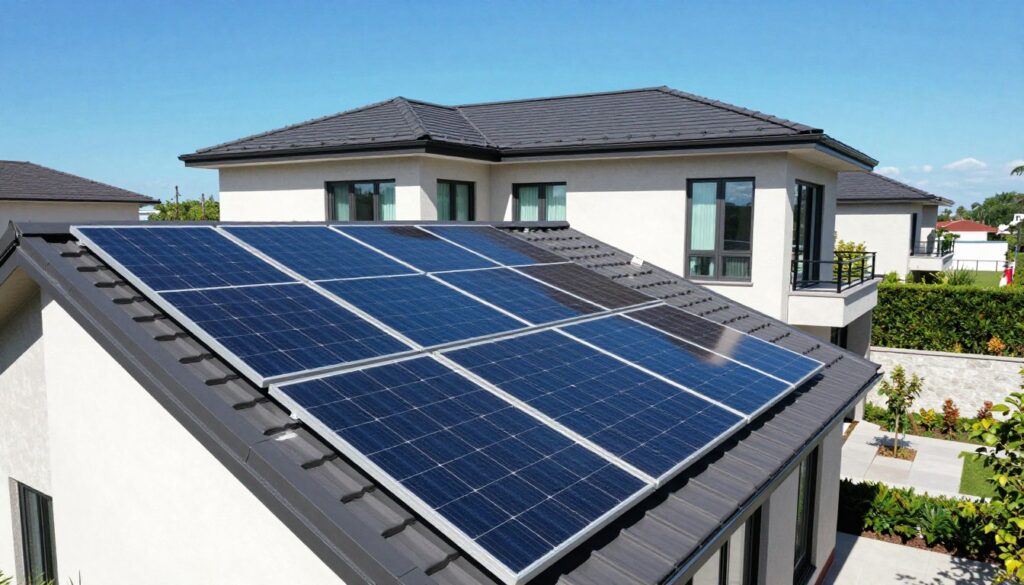
The heart of a solar system is the photovoltaic (PV) panel. It has many silicon cells. When sunlight hits these cells, it makes direct current (DC) electricity.
This process is quiet and has no moving parts. It’s a reliable way to make energy.
Efficiency is key when picking panels. In India, monocrystalline panels are top choice. They work well in different temperatures, catching as much sunlight as possible.
The Role of Inverters and Net Metering in Residential Setups
Most home appliances need alternating current (AC). The inverter changes the DC power from panels into usable AC. Without it, your panels’ energy can’t power your home.
Net metering lets you send extra power back to the grid. You get credits on your bill. It makes your meter track energy in both directions, so you only pay for what you use.
On-Grid vs. Off-Grid Systems Explained
Choosing the right system is key. An on-grid system connects to the grid. It’s great for city homes to cut down on bills. It’s also cheaper because you don’t need batteries.
An off-grid system works alone. It uses batteries for power at night or on cloudy days. It gives you full control but costs more upfront for batteries.
Calculating Potential Savings on Your Monthly Electricity Bill
Switching to a Solar Rooftop System for Home in Shahada can cut down your monthly bills. By looking at how much energy you use now and comparing it to local prices, you can see how much money you’ll save over time.
Analyzing Current Electricity Tariffs in India
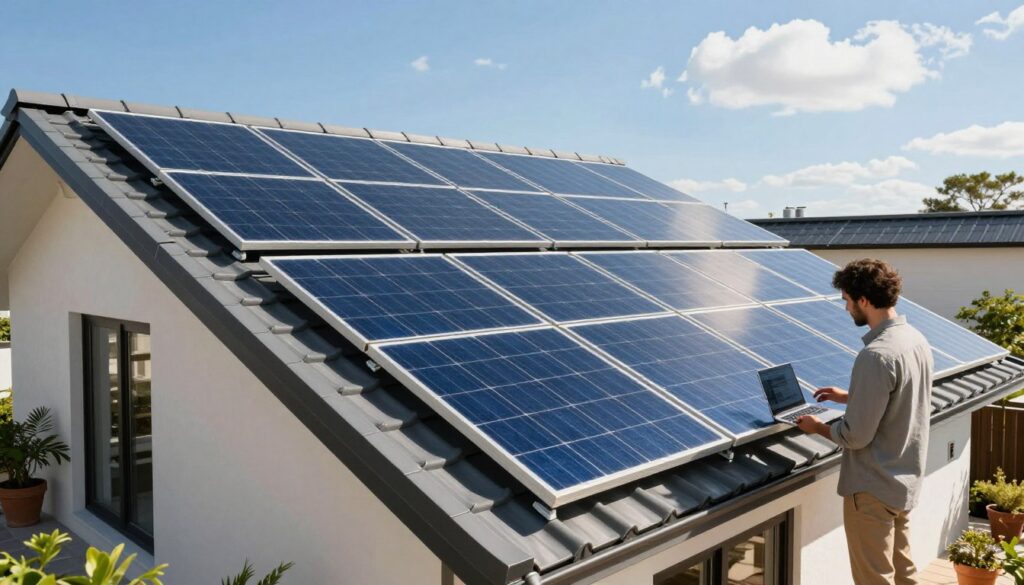
In India, the cost of electricity varies by state. Most places use a tiered slab system. This means the more you use, the more you pay. Solar panels help by reducing the amount you pay for the most expensive parts of your bill.
“The true value of solar energy lies not just in the power generated, but in the escalating cost of grid electricity that you successfully avoid.”
Estimating Monthly Reductions Based on System Capacity
Your savings will depend on your Solar Rooftop System for Home in Shahada size and how much energy your home uses. A good system should cover most of your daytime needs. This way, you use less grid power when it’s most expensive.
| System Capacity (kW) | Avg. Monthly Generation (Units) | Estimated Monthly Savings (INR) |
|---|---|---|
| 3 kW | 360 – 400 | 2,500 – 3,500 |
| 5 kW | 600 – 650 | 4,500 – 5,500 |
| 10 kW | 1,200 – 1,300 | 9,000 – 11,000 |
Impact of Peak Sun Hours on Energy Generation
The performance of your Solar Rooftop System for Home in Shahada depends a lot on peak sun hours. These are the hours when the sun shines the strongest. Places with more sun will make more money from their solar panels.
Geographical location is key in figuring out these hours. Homeowners should look at local solar maps. This helps them plan for changes in the sun’s strength throughout the year. Keeping an eye on your system’s performance ensures it works best all year.
Government Subsidies and Financial Incentives in India
Using solar energy solutions in Shahada ,India is now more affordable thanks to government support. These financial tools help lower the cost for middle-class families. This makes sustainable power more accessible to more people.
Overview of the PM Surya Ghar Muft Bijli Yojana
The PM Surya Ghar Muft Bijli Yojana is a big step towards electrifying homes. It gives financial help to those who install rooftop solar systems. This encourages people to use cleaner, self-reliant energy sources.
Those who join can get a big discount on their solar system costs. This makes solar energy solutions in Shahada is a good choice instead of grid electricity. The application process is easy to make sure everyone gets the help they need.
State-Level Net Metering Policies and Benefits
State policies also help make solar setups more affordable. Net metering lets homeowners send extra electricity back to the grid. This turns your solar system into a revenue-generating asset.
“Net metering is the cornerstone of residential solar adoption, transforming consumers into prosumers who actively contribute to the national energy grid.”
In India, most states have clear net metering rules. These rules help you get credit for the power you send to the grid. This lowers your electricity bill and speeds up your investment return.
Tax Benefits and Depreciation for Residential Solar Owners
Homeowners and small business owners can use tax benefits to save money. While direct subsidies help homeowners, businesses can claim depreciation. This solar energy solutions in Shahada strategy reduces taxable income over time.
| Incentive Type | Primary Benefit | Target Audience |
|---|---|---|
| Central Subsidy | Direct Cost Reduction | Residential Homeowners |
| Net Metering | Monthly Bill Credits | All Solar Users |
| Depreciation | Tax Liability Reduction | Business/Commercial Owners |
Knowing about these financial tools is key to getting the most from your system. By using subsidies and smart energy management, your investment will stay highly profitable for a long time.
Factors Influencing the Return on Investment
Choosing solar energy solutions in Shahada for your home is a big financial step. It’s important to think about how your initial investment will save you money in the long run. This way, your roof becomes a valuable asset for your family.
Initial Installation Costs and Equipment Quality
The cost of your system depends on the quality of its parts. Choosing Tier-1 solar panels and efficient inverters might cost more upfront. But, they make your system work better and last longer.
Good equipment can handle tough weather, which is key in India. Cheaper options might seem good, but they can cost more to replace later. Spending on top-notch hardware is key for good solar energy solutions in Shahada.
Maintenance Requirements and Long-Term Durability
Solar systems need little upkeep, but some care is needed. Cleaning panels to catch sunlight is important. Most systems also have software to spot any issues early.
A well-kept system can last 25 years or more, saving you money for decades. Taking good care of it means it keeps giving you savings for years.
Evaluating the Payback Period for Your Household
The payback period is how long it takes for your savings to cover the system’s cost. In India, most homes see a full return in 4 to 6 years. You can figure this out by dividing the system’s cost by your yearly savings.
| Component | Impact on ROI | Durability Expectation |
|---|---|---|
| Tier-1 Solar Panels | High Efficiency | 25+ Years |
| Quality Inverter | Optimal Conversion | 10-15 Years |
| Professional Mounting | Structural Integrity | 20+ Years |
| Regular Cleaning | Maximum Output | Ongoing |
By choosing quality parts and keeping up with maintenance, your investment pays off. This smart approach helps you save money and helps the planet.
Best Practices for Maximizing Solar Energy Efficiency
To get the most out of your investment, you must actively manage your solar energy solutions in Shahada. The initial setup is important, but how you operate and maintain it matters more. By focusing on a few key areas, you can ensure your panels perform at their peak throughout the year.
Optimizing Roof Orientation and Tilt Angle
The physical placement of your panels is key to energy production. In India, panels should face South to capture the most sunlight. If a true South orientation is not possible, a slight deviation toward the East or West can still yield acceptable results.
The tilt angle is also crucial for efficiency. Adjusting the angle based on your specific latitude helps the panels receive direct sunlight for longer periods. Professionals often recommend a tilt that matches the local latitude to balance production across different seasons.
Monitoring Energy Consumption Patterns
Generating power is only half the battle; using it wisely is the other. You can maximize your savings by shifting high-energy tasks, such as running washing machines or water pumps, to the peak sunlight hours. This strategy ensures you consume the electricity as it is generated rather than relying on the grid.
Modern solar energy solutions in Shahada often come with monitoring apps that provide real-time data. Tracking your usage patterns allows you to identify waste and adjust your habits. Consider these simple steps to improve your efficiency:
- Run heavy appliances during the midday sun.
- Use energy-efficient LED lighting throughout your home.
- Install smart plugs to manage standby power consumption.
Regular Cleaning and Maintenance Schedules
Dust, bird droppings, and debris can significantly block sunlight and reduce your system’s output. In dusty environments, a simple cleaning schedule is essential to keep your panels working at full capacity. We recommend cleaning your panels at least once or twice a month using soft water and a non-abrasive cloth.
Beyond cleaning, schedule a professional inspection once a year to check for loose wiring or micro-cracks. Consistent maintenance ensures that your solar energy solutions in Shahada remain durable and reliable for decades. Taking these small steps today will protect your investment and keep your electricity bills at an absolute minimum.
Conclusion
Modern power technology changes how Indian households manage their money. Investing in top-notch hardware helps protect against rising utility costs. It also boosts your property’s value.
Reliable solar energy solutions in Shahada lead to true energy freedom. With the PM Surya Ghar Muft Bijli Yojana, you can lower initial costs. This makes your investment pay off faster. It also helps the environment and keeps your budget steady for years.
Keeping your system in good shape is key. Regular checks on your energy use help you save more. These solar solutions are good for your wallet and the planet.
Start by checking your roof and local sunlight today. Make your home sustainable with clean power. Enjoy lower bills and a greener future with one smart choice.
 Previous Post